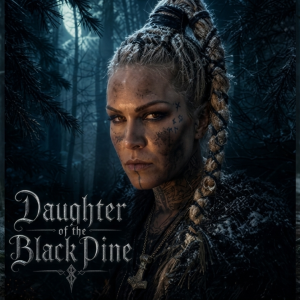
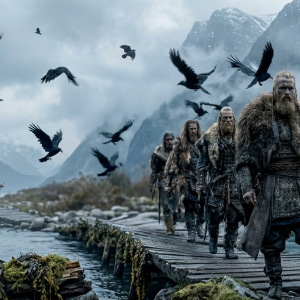
Wild Blood by THORA has become one of the breakout dark Viking folk videos of the autumn, passing a million views on YouTube within a month of its release in early October 2026. It is a song about refusing to be tamed: a woman who hears the old drums in the forest at night and lets something ancient wake up inside her. Here is a look at what the song is about, how its sound is built, and why it fits so neatly into the current wave of female-led Viking music.
What the song is about
At its heart, Wild Blood is a song about transformation. The official description sets the scene in ancient forests, with drums echoing through the night and a blood-red moon rising, and invites the listener to follow as something wild awakens. The narrator is not a warrior in the traditional sense. Her battle is with the person she used to be: quieter, more fearful and more willing to bow. Over the course of the song that version of her is left behind, and what remains is someone defined by courage, instinct and a deep connection to the land and the old ways.
That theme of self-reclamation is what lifts the track above a standard battle anthem. The wildness in the title is not violence; it is freedom.
Wolves, moons and the old gods
The imagery of Wild Blood draws on symbols that run deep in Norse tradition. Wolves are everywhere in the myths: Odin’s companions Geri and Freki, the monstrous wolf Fenrir, and the wolves Sköll and Hati who chase the sun and moon across the sky. In the sagas, warriors known as úlfheðnar, “wolf-skins,” were said to fight with the ferocity of wolves. A blood-red moon, meanwhile, has long been read as an omen in many cultures, a sign that the ordinary order of things is about to change.
THORA uses these images not as history but as metaphor. The wolf stands for instinct and loyalty, the moon for the moment of change, and the old gods for a sense of belonging to something older and stronger than modern life.
The sound: drums, chant and a big chorus
Musically, Wild Blood sits between dark Nordic folk and modern pop songwriting. The main elements are:
- Deep, tribal drums that set a slow, ritual pulse in the verses and drive harder in the chorus.
- A strong female lead vocal that moves from restrained, almost whispered lines to a full, open chorus.
- Chant-like hooks built around short, repeated syllables that are easy to sing along to.
- Dark atmospheric layers that suggest night, forest and open space.
At over four and a half minutes, it is longer than many tracks in the genre that are built for short-form video, which gives it room to build gradually. The structure rewards a full listen: the song gets heavier and more confident as the narrator does.
Part of the album I AM THORA
Wild Blood is one of the songs on THORA’s album I AM THORA. According to the artist, each track tells its own story, but together they reveal the spirit of a woman who was never meant to be tamed. That makes the album a loose concept record, and Wild Blood works as something like its thesis statement. The release is credited to Bellevie Music Company, and it is available on Spotify, Apple Music, Amazon Music and other major platforms.
The name itself is fitting. Thora, or Þóra in Old Norse, is a traditional Scandinavian name derived from Thor, the god of thunder and the protector of humankind in Norse mythology. For an artist whose music is about strength and defiance, it is an apt choice.
Why female Viking voices are having a moment
THORA is part of a clear trend. Over the past few years, many of the fastest-growing Viking and Nordic folk projects online have been led by female voices, from established artists such as Eivør to newer channels like FREYVRA, YRVANA and AEYSA. These projects tap into the image of the shield-maiden and the völva, the seeress of Norse tradition, and into a broader appetite for stories about women who are powerful on their own terms.
Musically, a female lead also gives the genre a different colour. Where classic Viking music often relies on deep male chanting, songs like Wild Blood combine that weight with a soaring melodic voice, which helps them reach listeners beyond the traditional folk audience.
Final thoughts
Wild Blood succeeds because it pairs strong imagery with a clear emotional message: it is a song about becoming who you were always meant to be. If you enjoy dark folk with a big, singable chorus, it is a great entry point into THORA’s world and the album I AM THORA.
What does “wild blood” mean to you: freedom, strength or something else? Share your thoughts in the comments.