Daughter of the Black Pine is one of the darkest and most defiant releases from Bjorn Bonebreaker, the AI-driven Viking music project best known for heavy battle anthems and, more recently, emotional Nordic ballads. This time the project turns its attention to a single character: a woman raised by the forest who answers to no ruler, no church and no master. Below we look at what the song is about, how it is built musically, and why its imagery hits so hard with fans of Viking and Nordic music.
The story at the heart of the song
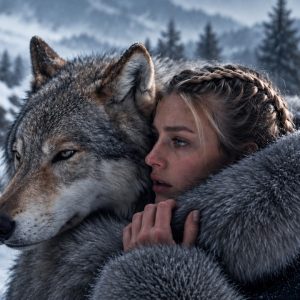
The song is told from the point of view of a woman who grew up deep in a pine forest, far from villages and kings. Her childhood is described through harsh, physical details: ravens, winter frost, smoke from the fire, and a mother who kept time on a hide drum and taught her daughter never to run from danger. There is no romantic rescue in this story and no outsider who saves her. The forest raised her, and the forest is where she belongs.
That is the core idea of the track: independence that is earned through survival. The narrator rejects three symbols of control that will feel familiar to anyone who knows the history of the Viking Age, namely a crown, a cross and a chain. In other words she refuses earthly kings, the new religion arriving from the south, and slavery. What she chooses instead is the old world: the trees, the soil, the sky and the old gods.
A song about the end of an era
Read in its historical context, the song sits right at the moment when the old Norse world was disappearing. Between the tenth and twelfth centuries Scandinavia was gradually unified under Christian kings, and the old beliefs tied to nature, ancestors and local spirits were pushed to the margins. Many modern Nordic folk artists return to this period because it is full of tension, and Daughter of the Black Pine uses it in the same way. The narrator is not just a fierce warrior; she is one of the last people living by the old ways, and she knows it.
That gives the song a bittersweet edge. Underneath the defiance there is a sense of loss, and that mix of pride and grief is a big part of why it lands emotionally rather than feeling like a simple power fantasy.
The symbolism of the black pine
Trees carry enormous weight in Norse tradition. The cosmos itself is imagined as a great tree, Yggdrasil, whose roots and branches connect the nine worlds. Forests in the sagas and myths are places of danger and transformation, home to outlaws, giants and spirits. The dark pine forests of Norway and Sweden were also a practical reality: they gave timber for ships and houses, fuel for winter, and shelter for people who lived outside the law.
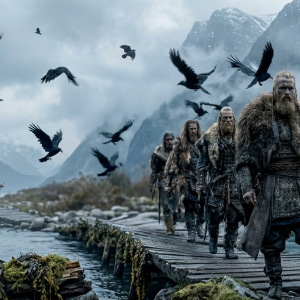
The “black pine” in the title works on all of these levels. It is a real landscape, a refuge, and a symbol of something older than any kingdom. When the narrator says she belongs to the pine, she is claiming roots that no ruler can grant or take away. Ravens, which appear throughout the song’s imagery, also matter here: in Norse myth Odin’s two ravens, Huginn and Muninn, fly across the world each day and bring him news, so their presence suggests that the old god is still watching.
How the music builds the mood
Musically the track belongs to the dark Viking rock side of Bjorn Bonebreaker’s catalogue rather than the acoustic folk of songs such as I Had A Farm. Heavy, steady drums drive the verses, the guitars sit low and thick in the mix, and the vocal is delivered with a chant-like rhythm that makes the chorus easy to shout along to. The structure follows a classic build: quiet, story-focused verses, a chorus that turns the narrator into a legend, and a bridge that becomes almost a ritual invocation to the forest and the gods.
That bridge is the emotional peak. The arrangement strips back, the rhythm becomes more percussive, and the vocal shifts from storytelling to calling out, as if the narrator is asking the land itself to make her stronger. It is a simple trick, but it is very effective, and it is the moment most fans single out in comments.
Why it connects with listeners
Part of the appeal is obvious: the song is an anthem of self-reliance, and lines about refusing to kneel translate easily into workout edits, short videos and personal “glow-up” stories. But the more lasting reason is the character. A female warrior raised by the wilderness, with a mother who passed on courage rather than fear, gives listeners someone to root for. Shield-maidens appear in Norse sagas and modern TV, and the song taps into that fascination without turning her into a costume.
It also helps that the song tells a complete story in a few minutes. You know where she came from, what she rejects and what she becomes, which is more than many anthem-style tracks manage.
About Bjorn Bonebreaker
Bjorn Bonebreaker is presented by its creators as a virtual music persona: the vocals, arrangements and visuals are produced with AI tools under human creative direction. The project first became known for aggressive Viking-style gym anthems before moving into more narrative songs such as Mama, Don’t Close Your Eyes and Bye, my Mama. Daughter of the Black Pine brings those two sides together: the weight of the battle songs and the storytelling of the ballads.
Final thoughts
Daughter of the Black Pine works because it is more than a list of Viking clichés. It has a clear character, a strong sense of place and a historical backdrop that gives its defiance real meaning. If you enjoy the darker side of Nordic-inspired music, it is one of the strongest entries in Bjorn Bonebreaker’s catalogue.
What does the black pine mean to you: freedom, strength, or a last refuge of the old world? Share your thoughts in the comments.